
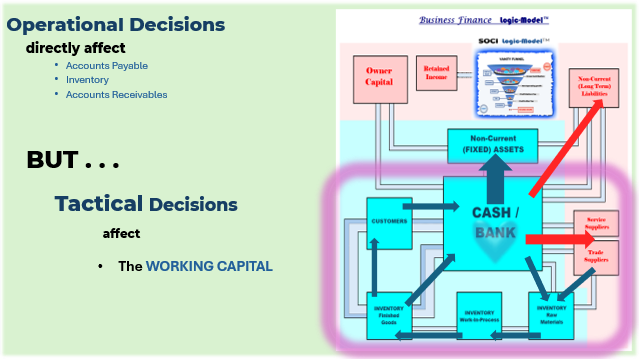
In the book on the different Business Financial  (the 12 bucket system),
one can clearly see that investment decisions change a business from a strategic perspective as well as a tactical aspect,
and may even affect the operational levels within a business.
If the decision is found to be incorrect after action has taken place on that decision, it is not merely a simple process of disinvesting. The business entity’s path of existence will have been changed permanently
A firm’s future is therefore decided by today’s investments. Often large amounts of capital will have been tied up and it will affect the future survival or even its ability to react to new opportunities as they arise.
It is therefore insufficient for the business leader to merely ensure that the profit has increased.
To this end CFO’s carry out investment appraisals, which go further than ensuring that the incomes statement shows an accrued profit going forward. Accounting profit increase or having a positive operational result do not answer if the investment created real value for all stake holders in the business.
Unfortunately there is no one-size-fits-all solution.
However it need not be a mystery either and here you will learn some of the answers in easy to understand methodologies.

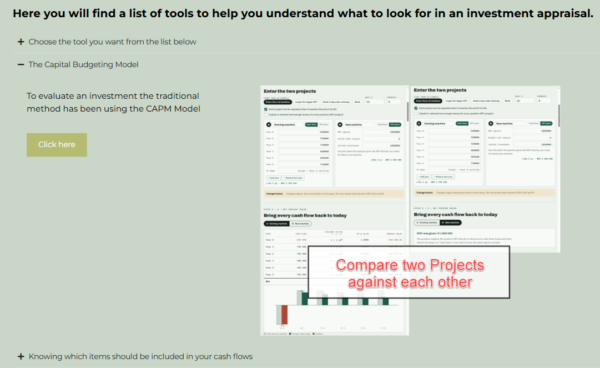
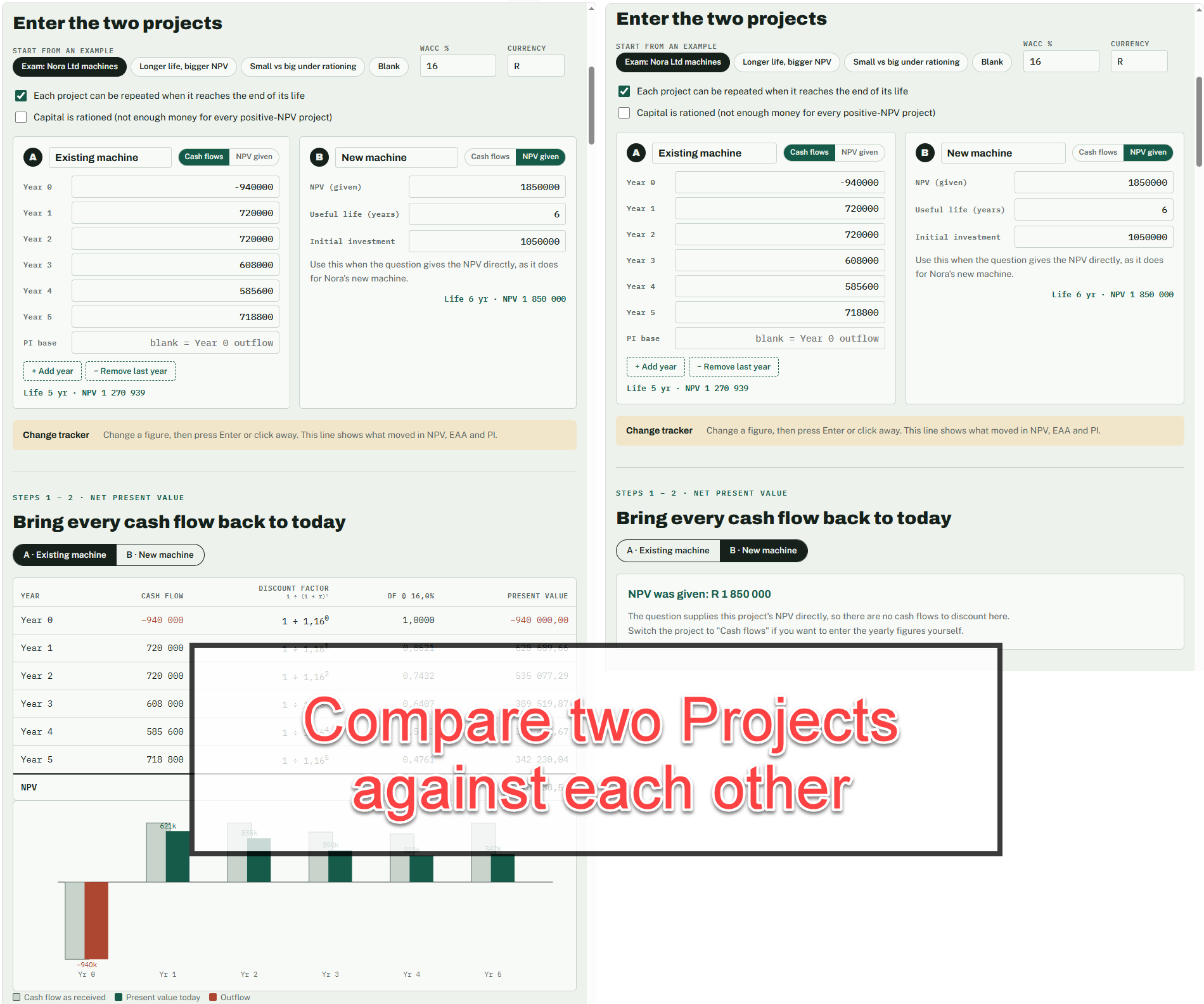
To evaluate an investment the traditional method has been using the CAPM Model
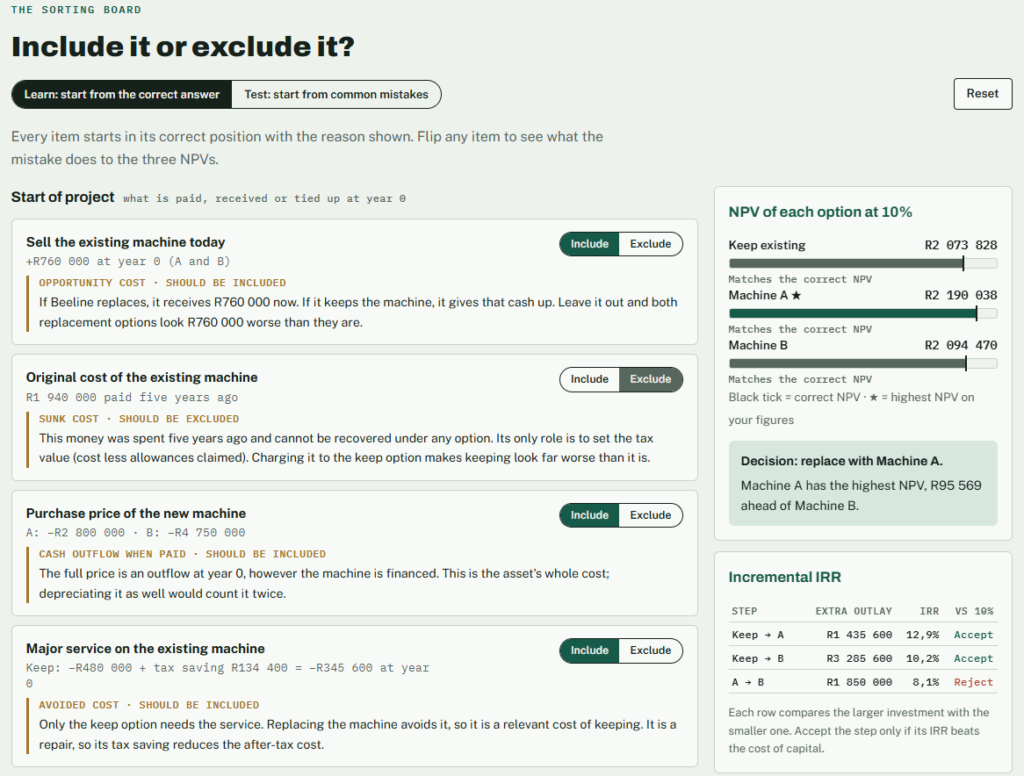
Making incorrect choices gives incorrect results!
This tool helps one to understand when to include or exclude an expense in an evaluation.
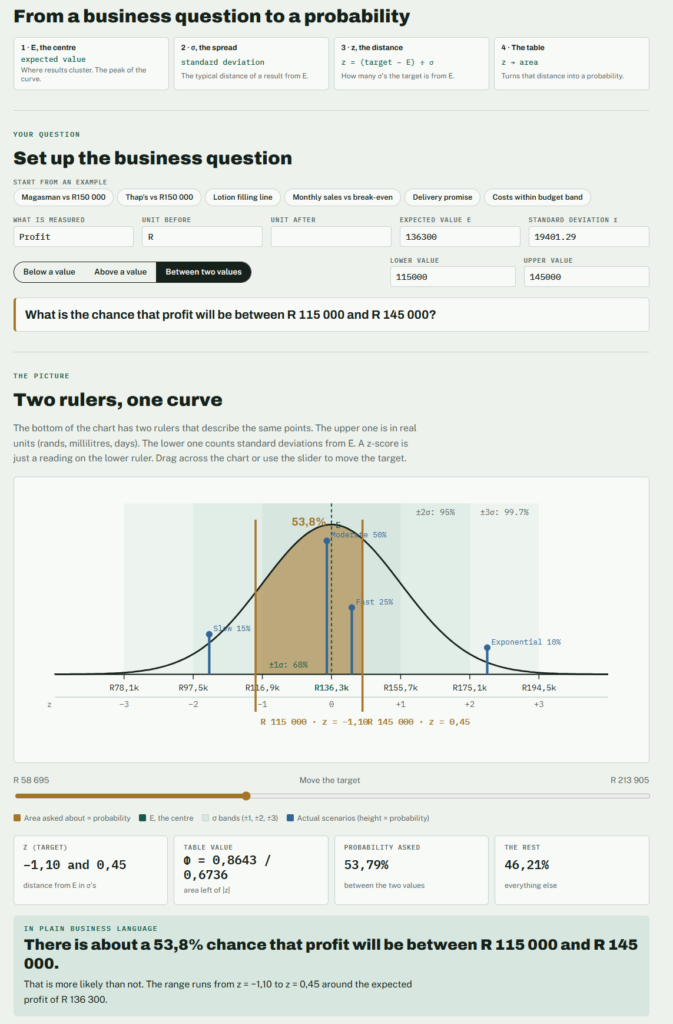
What does the standard deviation show with regard to the probability of an investment being achieved?
Does stats really help here?
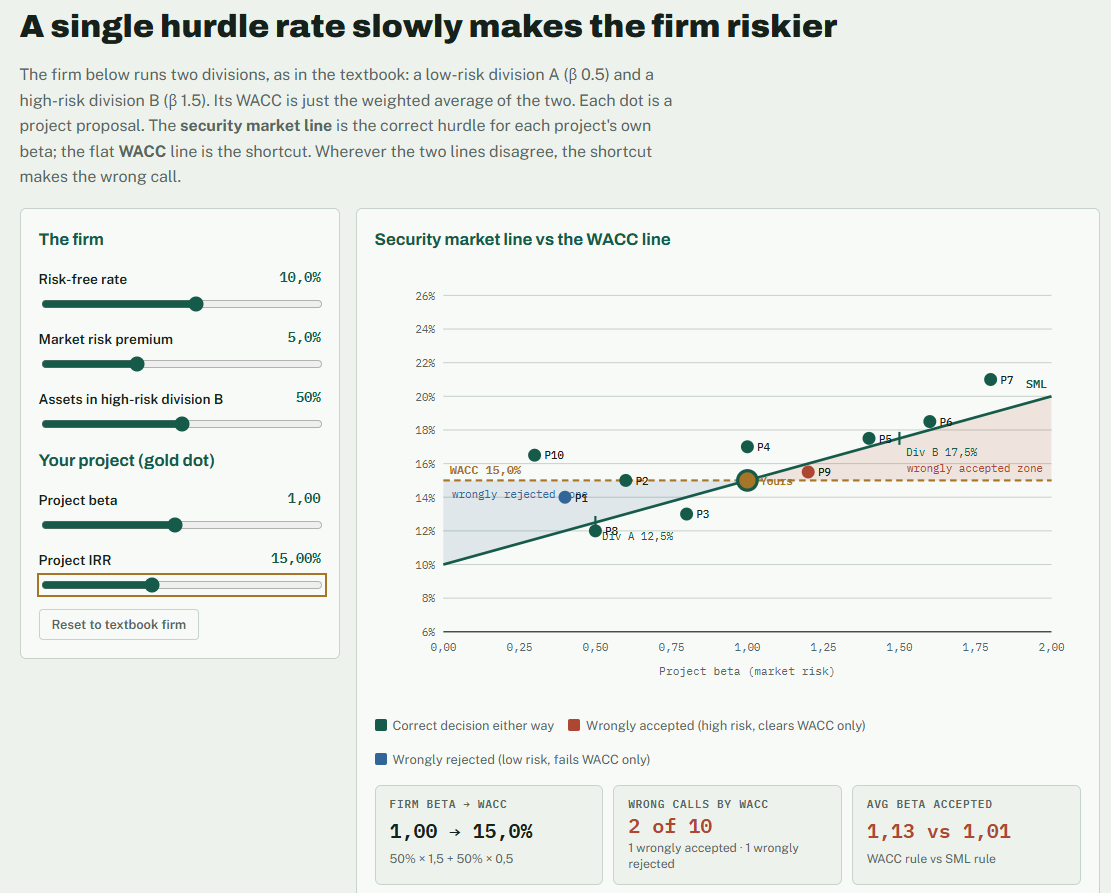
What are the dangers of using a single WACC figure in an investment decision?
Could you be accepting a decision that should have been rejected?
Are your hurdle rates in danger of disqualifying projects that maybe should be done?
Often it is found that companies have dismissed a project as to low where in fact it could have improved the overall business performance.
This tool helps you identify these scenarios.
If you would like to know or learn more drope me a note on siegmund@gglogics.com